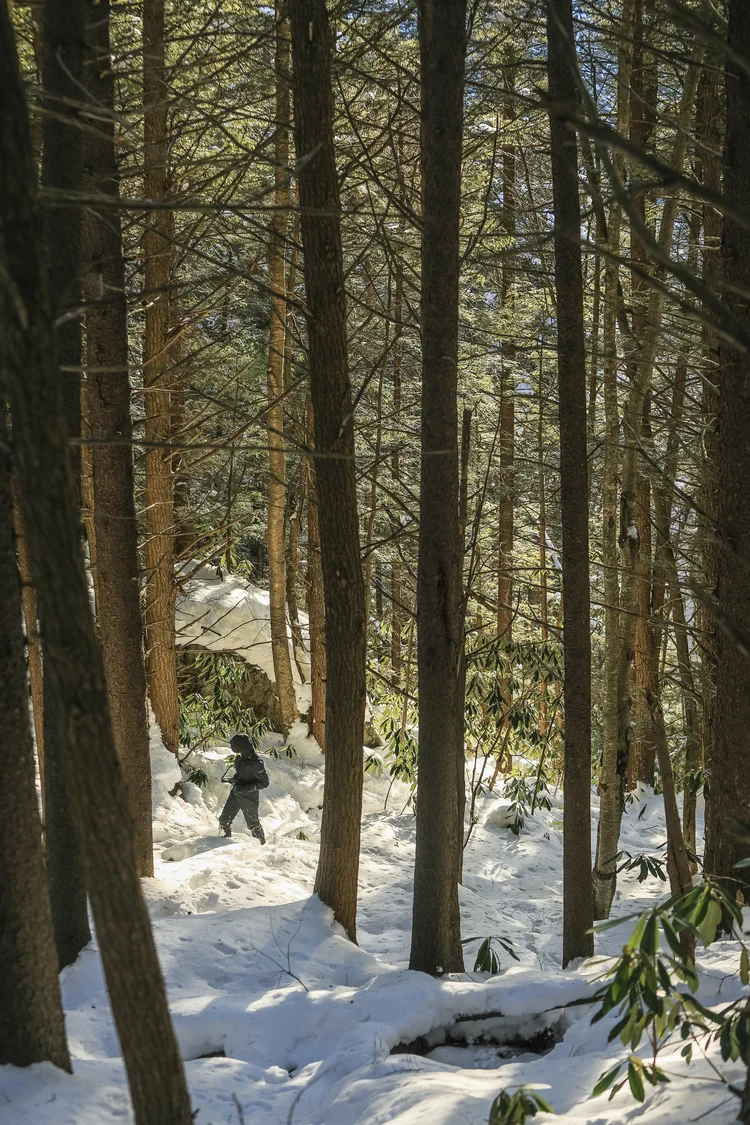
Hello,Happy New Year, friends. Winter has been a season of transition. Curren, the boys, and I have moved to Elkins, West Virginia—a small town in the mountains where the Tygart River keeps time. The change feels right. Slower, quieter, a little less connected in all the ways I’ve been craving. Getting settled into a new place takes time, but this town has welcomed us in ways that feel deeply human. Neighbors, new friends, and family have shared meals, baked us homemade bread, taught us how to cross country ski, and handed down winter gear for the kids. When our basement flooded and we had no heat or hot water in freezing temperatures, people opened their homes so we could shower and do laundry. The kindness here has been humbling. Elkins has about 6,755 people. If you’re familiar with A Pattern Language, you’ll know that small towns around this size tend to foster connection. They’re big enough for diversity of thought, small enough for people to still feel heard. “Individuals lose their effective voice in communities larger than 10k people. Organize government to give local control in groups of 5k-10k. Use natural or historical boundaries as often as possible to mark these communities.”
In Elkins, the electrician handwrites his invoices and sends them by mail. People still believe in a good flyer. The coffee shop hums with ideas. The fire department shows up, fast, when you need them. There have been clothing swaps, plant swaps—seed swaps are coming soon. I don’t want to romanticize this place—there are plenty of problems in Elkins—but there’s a spirit of community here that I’ve been longing for. Lately, I’ve been thinking a lot about voice. My natural tendency is to be quiet, at least online (I’ll talk your head off at a dinner party). Aren’t there already enough people sending newsletters, asking for clicks, calling for attention? I hesitate to take up space. But at the same time, I don’t feel comfortable with silence. I’m not here to talk politics, but right now change is undeniable no matter who you are or where you live. Some people thrive in moments of upheaval, finding new ways to create and build. Others feel paralyzed. My neighbors—many of whom work for the Forest Service and other federal agencies—are making backup plans, figuring out how to support their families. Some are considering growing more of their own food. Others are looking to trades like electrical or plumbing work—skills that AI won’t replace anytime soon. And some are simply overwhelmed, unsure of what comes next. And in my own industry, filmmaking, I’ve been grappling with what sustainability really looks like. For years, we filmmakers gave our films over to streamers. It felt like a golden era for documentary, but looking back, was it? Or was it just another system built on extraction? I recently got a check from PBS FRONTLINE—a small thing called royalties. A concept that I’m not sure future indie filmmakers will ever see or even hear of. The way films are distributed and valued is shifting, and not necessarily in ways that benefit those making them. Curren and I talk daily about how to make our work more tangible, more lasting, less at the mercy of industry whims. How do we create in a way that isn’t reliant on platforms that treat stories as just another piece of content? How do we tell meaningful, beautiful stories—and sustain ourselves—while keeping our focus on the people around us? We don’t have the answers yet, but we’re asking the questions. I’d love to hear any of your thoughts. It seems that some seasons are for creating, some for waiting, and some are just about getting through. Whatever this moment looks like for you, I hope you’re finding small joys. I’m looking forward to spring. Longer days, softer ground, new things taking root. Warmly,
Elaine P.S. There’s work-in-progress but I am not at a stage to share. Thanks for reading, for being here, for supporting the work.
|